We’re damn lucky language works at all.
The chairs
Imagine people saying “chair.” Each speaker has a precise idea of their chair.
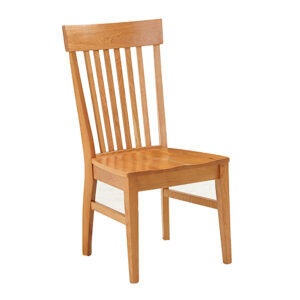

The chairs are different, but most people would agree they are chairs. That word does not provide more information without context or reason (e.g., kitchen, office).
There is no reason to limit this vagueness to chairs. Or even just all nouns, this vagueness of definition happens across nearly all words.
The Pointer Analogy
If you think idea is a restatement of “the map is not the territory”, I acknowledge the influence on my thinking.
In lower-level computer programming (C, specifically), there is this notion of a “pointer.” A pointer “points” to a memory address. Let us see words as pointers to “ideas” and those ideas live in, for want of a better word, an “idea space”. Except ideas are not the same as words. Ideas are blobs of meaning. Words just point to one spot within that blob.
This is a powerful tool in the right hands. And a dangerous one if in the wrong hands. Probably like a lot of things.
This makes sense if we have a thought experiment: if you have two people who do not know a language who are forced to communicate. They use body language and pointing and basic words. These things are not universal grammars, as some would suggest. They would point to the chair and use their words.
The Contract
This, of course, presumes that both people want to communicate. If there is dishonesty at any part of this, the whole process can fall apart. We must not only assume honesty in communication, but a willingness to try to make it work.
We can imagine an early homo sapiens pointing to a suitably-shaped stump and calling it whatever word she used for “chair” and having someone else understand exactly what she’s saying. Fortunately , we can imagine many things, but evidence is required to believe.
If words are pointers, we are pointing them to slightly different address in an “idea space”. Your chair is still a chair, but it’s not my chair.
this does not mean the word is unclear; it’s just a pointer. Our words are not magic nam-shubs, directing the goddess Inanna to change reality. Language is actions, noises, and gestures beings make to share an idea.
We can continue the communication, obviously. We can guide the language ever more closely to the same part of idea space. Can we reach it? More importantly: does it matter? Once the idea has been transferred to our mutual satisfaction, we will stop.
The Stop
Stopping is important. It signals an understanding or an abandonment of that effort. But even in stopping, a larger context could give more information.
If I stop listening to you, there is a difference between me wanting to talk vs me with a question that halts my cognition vs a sudden and fatal heart attack.
The Hypothesis
Many people smarter than I have advanced theories of linguistics, with such things as a universal grammar. Their stature vs my own is certainly a concern, but that is about me and not about the topic.
IThe idea itself feels stupid simple. Like, there has to be more than just pointing and making a noise until the other person gets it.
What happens when we think of the development of language as an evolution of ways to communicate? What does that metaphor imply?
I don’t know. But I think about it a lot. It means some things about the future. It means that we’re using words to create structures they were never meant to hold up.
Also, can we even call that a hypothesis? Everyone has their own definitions of words and our methods of communication continue to change, it’s a banal observation.
And sometimes you write a few hundred words without knowing why.